
Snow Days and Inclement Weather

Snow Days and Inclement Weather

Student and staff safety is our top priority, and we approach weather-related closures with careful consideration to minimize disruptions while ensuring everyone’s well-being. Below are some of the key factors that guide our decision-making process:

  • Weather Forecasts: We monitor trusted meteorological sources to evaluate predictions of snow accumulation, freezing rain, ice, and extreme cold.
  • Road Conditions & Transportation Considerations: Our transportation team assesses the safety of key routes, often driving them early in the morning. Bus reliability, exposure for students, and safe travel for buses, staff, and families are critical factors in the decision to close.
  • Temperature and Wind Chill: In extreme cold, safety is considered, and closures may occur if wind chills fall below certain warning thresholds. Decisions are made while monitoring the duration of extreme cold, not just brief temperature dips.
  • Local Infrastructure: The status of snow removal at school buildings and parking lots is assessed to ensure safe access for everyone.
  • Timing of Weather Events: Snow or ice expected during morning or afternoon commutes increases the likelihood of closures or delays.
  • Collaboration with Neighboring Districts: We communicate with surrounding districts to share information and, when possible, align decisions. We understand that weather-related school closings impact families, and we strive to provide timely and clear communication. By evaluating all these factors, we aim to balance safety and the importance of keeping students in school when conditions allow.

For more information on how snow days, cold days, and inclement weather events are determined, please see the graphics below. 

As a reminder, although the district does its best in this process, weather is unpredictable and no perfect decision exists. If you feel as a parent that it is not safe for your child to attend school, please know that you always have the option of keeping your child at home.
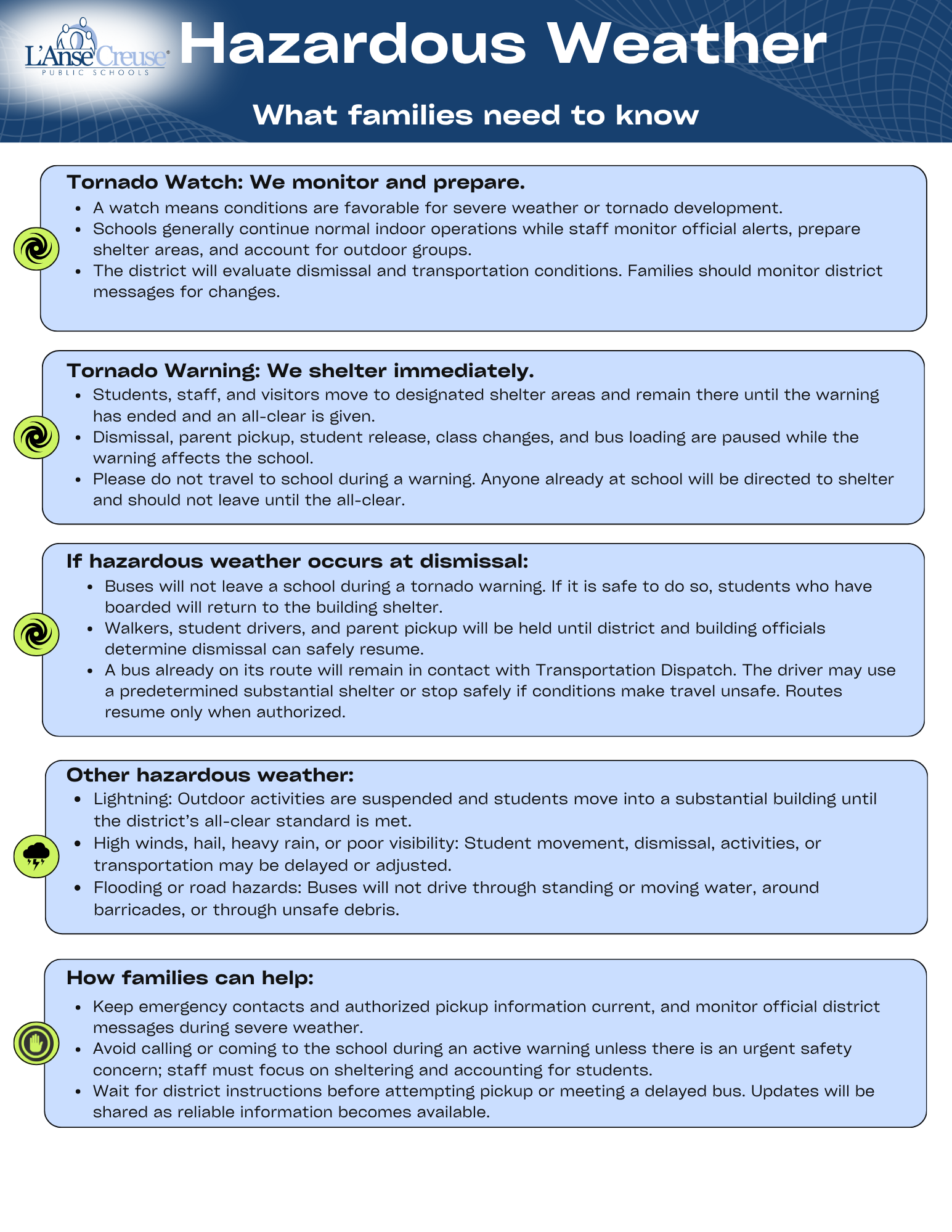
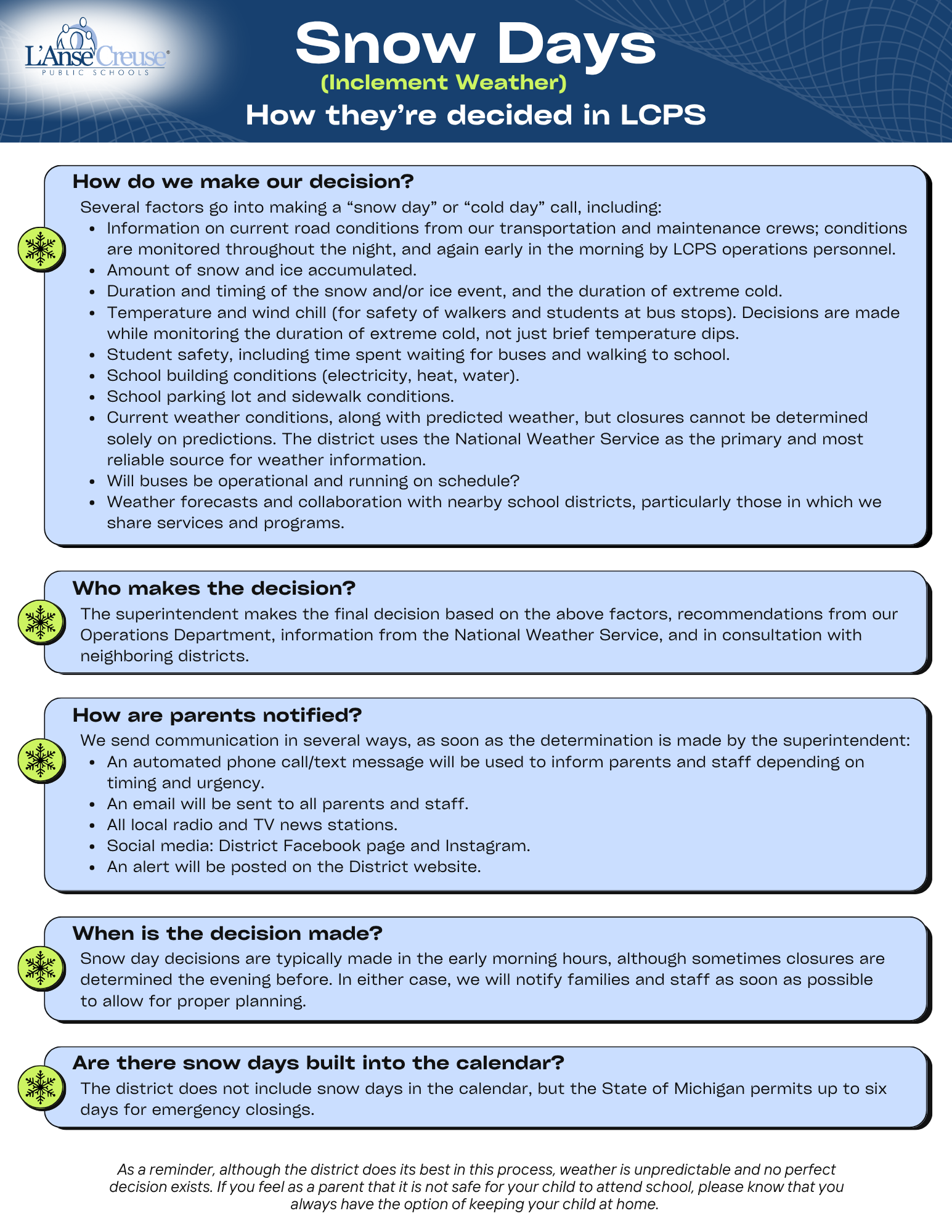
Hazardous weather - what families need to know. Tornado watch: we monitor and prepare. A watch means conditions are favorable for severe weather or tornado development. Schools generally continue normal indoor operations while staff monitor official alerts, prepare shelter areas, and account for outdoor groups. The district will evaluate dismissal and transportation conditions. Families should monitor district messages for changes. Tornado warning: we shelter immediately. Students, staff, and visitors move to designated shelter areas and remain there until the warning has ended and an all-clear is given. Dismissal, parent pickup, student release, class changes, and bus loading are paused while the warning affects the school. Please do not travel to school during a warning. Anyone already at school will be directed to shelter and should not leave until the all-clear. If hazardous weather occurs at dismissal: Buses will not leave a school during a tornado warning. If it is safe to do so, students who have boarded will return to the building shelter. Walkers, student drivers, and parent pickup will be held until district and building officials determine dismissal can safely resume. A bus already on its route will remain in contact with Transportation Dispatch. The driver may use a predetermined substantial shelter or stop safely if conditions make travel unsafe. Routes resume only when authorized. Other hazardous weather: Lightning: Outdoor activities are suspended and students move into a substantial building until the district's all-clear standard is met. High winds, hail, heavy rain, or poor visibility: student movement, dismissal, activities, or transportation may be delayed or adjusted. Flooding or road hazards: Buses will not drive through standing or moving water, around barricades, or through unsafe debris. How families can help: Keep emergency contacts and authorized pickup information current, and monitor official district messages during severe weather. Avoid calling or coming to the school during an active warning unless there is an urgent safety concern; staff must focus on sheltering and accounting for students. Wait for district instructions before attempting pickup or meeting a delayed bus. Updates will be shared as reliable information becomes available.Snow Days (inclement weather) How they're decided in LCPS. How do we make our decision? Several factors go into making a “snow day” or “cold day” call, including: Information on current road conditions from our transportation and maintenance crews; conditions are monitored throughout the night, and again early in the morning by LCPS operations personnel. Amount of snow and ice accumulated. Duration and timing of the snow and/or ice event, and the duration of extreme cold. Temperature and wind chill (for safety of walkers and students at bus stops). Decisions are made while monitoring the duration of extreme cold, not just brief temperature dips.   Student safety, including time spent waiting for buses and walking to school. School building conditions (electricity, heat, water). School parking lot and sidewalk conditions. Current weather conditions, along with predicted weather, but closures cannot be determined solely on predictions. The district uses the National Weather Service as the primary and most reliable source for weather information. Will buses be operational and running on schedule? Weather forecasts and collaboration with nearby school districts, particularly those in which we share services and programs. Who makes the decision? The superintendent makes the final decision based on the above factors, recommendations from our Operations Department, information from the National Weather Service, and in consultation with neighboring districts. How are parents notified? We send communication in several ways, as soon as the determination is made by the superintendent: An automated phone call/text message will be used to inform parents and staff depending on timing and urgency. An email will be sent to all parents and staff. All local radio and TV news stations. Social media: District Facebook page and Instagram. An alert will be posted on the District website. When is the decision made? Snow day decisions are typically made in the early morning hours, although sometimes closures are determined the evening before. In either case, we will notify families and staff as soon as possible to allow for proper planning. Are there snow days built into the calendar? The district does not include snow days in the calendar, but the State of Michigan permits up to six days for emergency closings. As a reminder, although the district does its best in this process, weather is unpredictable and no perfect decision exists. If you feel as a parent that it is not safe for your child to attend school, please know that you always have the option of keeping your child at home.